Home › Weed Control and Hydroseed Spot Repair
We offer hydroseeding spot repair in Jacksonville, FL to correct bare patches and weed invasions in existing hydroseeded lawns. Our team identifies the cause, treats unwanted weeds, and re applies hydroseed where needed. Maintain a thick, uniform lawn with targeted repair and follow up care.
Legendary Hydroseeding Jacksonville provides professional hydroseeding spot repair throughout Jacksonville, FL, Florida and the surrounding area. Our licensed, insured crew delivers safe, clean, on-time work with a free estimate before anything begins. Call 904-867-3706 or request your free quote.
Targeted weed control for Jacksonville hydroseed lawns
Hydroseeded lawns in Jacksonville establish quickly, but our heat, humidity, and sandy soils are perfect conditions for aggressive weeds. Legendary Hydroseeding Jacksonville focuses on weed control that protects your existing hydroseed investment instead of starting over.
We begin with a walk-through of your yard, noting the age of the hydroseed, areas of thin grass, irrigation coverage, and existing weed species. In Jacksonville we frequently see crabgrass, sedge, dollarweed, Virginia buttonweed, and goosegrass crowding out new hydroseed. We identify which weeds you have because the right control product and timing depend on the species, not just the appearance.
For younger hydroseeded lawns we avoid harsh products that can burn new grass. Instead, we combine careful hand removal of large invaders with selective herbicides that are labeled as safe for your specific grass type and growth stage. For more mature hydroseeded lawns we can be more aggressive, using a mix of pre-emergent and post-emergent herbicides to stop both visible weeds and seeds in the soil.
Our focus is always on protecting root development. We will not recommend a weed control program that shortcuts results at the expense of long-term lawn health. If the safest path means staging your treatment over a couple of visits, we tell you upfront and explain exactly why.
How hydroseeding spot repair actually works
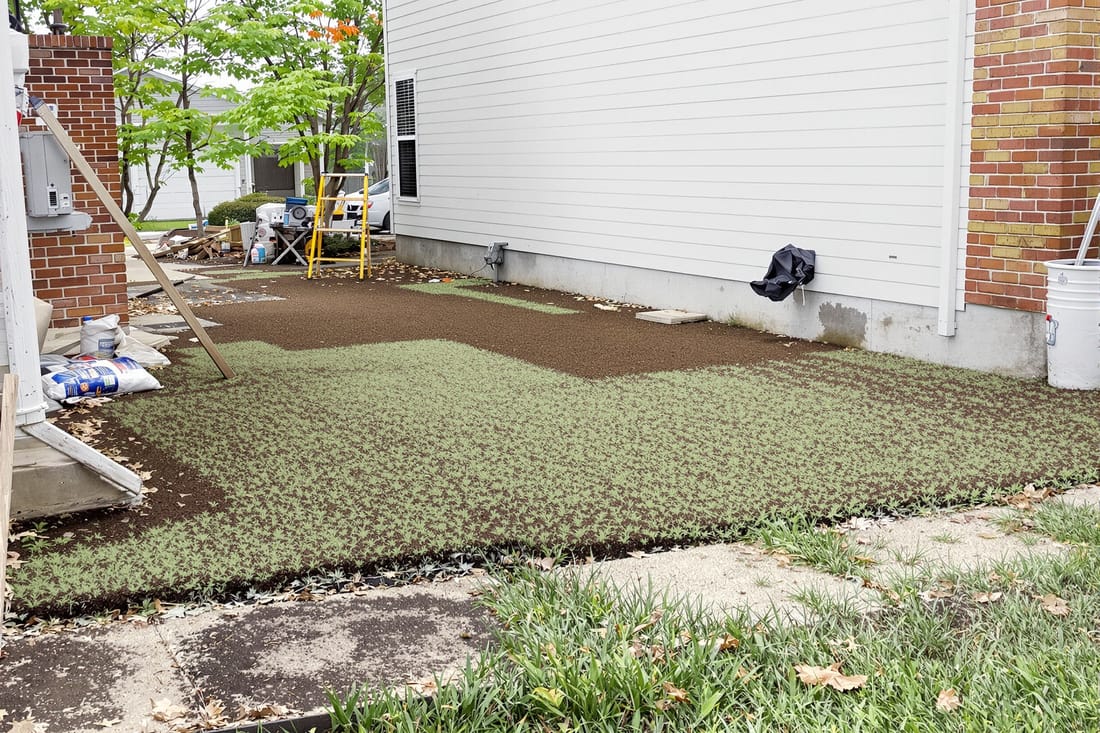
Hydroseeding spot repair is not just spraying more mulch over a bare patch. To get those spots to match your existing lawn, Legendary Hydroseeding Jacksonville treats each repair like a mini new installation.
First, we cut out dead thatch, compacted soil, and heavy weed clusters in the damaged area. If a spot was killed by a chemical spill, pets, or standing water, we remove enough soil to eliminate the cause, not only the symptom. We then loosen the soil 2 to 3 inches deep so new roots can penetrate instead of sitting on a hard pan.
Next, we match your current seed. In Jacksonville this usually means a cool-season rye blend over winter, or a warm-season Bermuda, zoysia, or Bahia mix for main lawns. We ask what we originally installed (if we did your hydroseeding) or visually confirm what is growing so the color and texture stay consistent. Using the wrong seed blend is the fastest way to end up with patchy-looking repairs.
We then apply a concentrated hydroseed mixture directly to the repair zone. This slurry includes seed, bonded fiber mulch, starter fertilizer, and tackifier to hold everything in place through summer storms. On steep or erosion-prone areas we increase the mulch and tackifier rate so the spot does not wash out with the first heavy rain.
Finally, we feather the edge of the repair into existing turf so there is no hard visual line once the new grass fills in. You end up with a repair that blends in instead of a square of different grass in the middle of the yard.
Step-by-step: from inspection to final touch-ups
Every weed control and hydroseeding spot repair project we handle in Jacksonville follows a clear, predictable process so there are no surprises.
1) Site inspection and cause finding. We look for patterns, for example, bare paths from kids or dogs, shaded zones under live oaks, or low spots holding water after an afternoon thunderstorm. We check irrigation coverage, water pressure, and run times because shallow, inconsistent watering is a main cause of thin turf here.
2) Weed and soil assessment. We identify broadleaf, grassy, and sedge weeds, then check soil moisture and compaction in damaged areas. If needed, we recommend a simple soil test to see if pH or salt buildup from reclaimed water is part of the problem.
3) Weed control plan. We schedule herbicide applications around your mowing and watering, plus the growth stage of both weeds and turf. For example, we stagger crabgrass control to avoid overlapping with new seeding in the same area. If we plan to spot repair soon after weed treatment, we choose products with appropriate waiting periods so new seed will germinate.
4) Hydroseed spot repair preparation. We cut and remove dead turf, loosen soil, and grade low spots so repaired areas do not become puddles. If chinch bugs, fungus, or grubs caused the damage, we include treatment or prevention steps before we reseed.
5) Hydroseed application and aftercare instructions. Once the slurry is sprayed, we provide a written watering schedule, traffic restrictions, and first-mowing timing specific to the season. Jacksonville summers typically require shorter, more frequent watering to keep the top layer moist without drowning the roots.
6) Follow-up. We return or request photos at 2 to 4 weeks. If any spots come in thin or uneven, we touch up with additional seed or adjust your watering or mowing practices so the repair fully blends in.
Local lawn problems we see in Jacksonville and how we fix them
Jacksonville yards have a specific mix of problems that generic lawn programs often ignore. Legendary Hydroseeding Jacksonville builds weed control and spot repair plans around what we routinely see from Atlantic Beach to Mandarin and out toward Orange Park.
Sandy, fast-draining soils cause fertilizer and moisture to move quickly past the root zone. This often leads to weak turf and strong weeds. For spot repairs in these conditions, we increase organic matter in the top two inches using compost blended under the hydroseed layer, not just on top. This helps the repaired area hold nutrients and moisture long enough for new grass to establish.
In older neighborhoods with big oaks and pines, shade and root competition thin out even healthy hydroseed. Repairing under trees without a plan simply invites more weeds. Where grass is still realistic, we switch to shade-tolerant seed blends and level out root bumps where possible. Where grass will never perform, we will tell you honestly and can suggest transitioning those spots to beds or groundcover instead of wasting money on repeated repairs.
Hot, humid summers mean fungus and insects are common in weakened lawns. Brown patch, dollar spot, and chinch bugs can destroy a section of hydroseed in a few weeks. Before we agree to a hydroseeding spot repair in these cases, we confirm that the disease or pest is under control. If not, we treat or coordinate treatment first, then schedule your repair so new seedlings are not immediately attacked.
We also factor in heavy afternoon storms and the St. Johns River influence. In low-lying or poorly drained yards, we may add erosion control fabric or increase tackifier and mulch rates. On slopes that lose soil every rainy season, we may split the repair into two stages, first stabilizing the area, then returning to overseed any thin spots.
What affects the cost of hydroseeding spot repair and weed control
Customers often ask why one spot repair costs more than another that looks similar in size. The price is mostly driven by what it takes to fix the cause of the damage and blend the repair into the rest of your lawn.
The first factor is preparation. A clean, small bare area on level ground with no underlying issue is simple. A larger area with compacted soil, deep thatch, or severe weed infestation requires more cutting, removal, and grading. In some Jacksonville yards, we bring in topsoil or compost to rebuild low or eroded sections before spraying hydroseed.
The second factor is access. Narrow side yards, steep slopes, or fenced areas that require smaller equipment add labor time. If we cannot get our larger hydroseeding hoses into a back corner, we may need additional setup time to reach that spot safely without damaging existing landscape.
The third factor is seed and product selection. Matching a specialty grass blend or repairing during a challenging weather window can require different materials. For example, summer repairs may need higher quality mulch, wetter tackifier, or additional fertilizer to handle heat and storm events. Weed control costs vary depending on whether you need basic broadleaf treatment or more advanced control for sedges and dollarweed that are resistant to cheaper products.
Legendary Hydroseeding Jacksonville provides clear, written estimates that separate weed control, prep work, and hydroseed application. That way you can see exactly where your money is going and make informed decisions about what to tackle now and what can wait.
How to keep repaired hydroseed areas weed free and thriving
Good hydroseeding spot repair solves the problem in front of you, but your daily care in the weeks after matters just as much. We give Jacksonville homeowners specific instructions tied to our climate so repairs do not fail.
Watering: For most repairs we advise short, frequent watering at first, usually 2 to 4 times a day for very brief cycles, just enough to keep the top half inch moist. Afternoon thunderstorms count as watering, so we ask you to pause your system after heavy rain to avoid drowning new seed. As the grass germinates, we gradually reduce frequency and increase depth so roots grow down instead of staying at the surface.
Mowing: Waiting too long for the first mow can cause young grass to fall over and weaken. We typically recommend mowing when the new grass reaches about 3 inches and is dry, using a sharp blade and removing only the top one third. Avoid tight turns with the mower on new repairs to prevent ruts and tearing.
Weed prevention: We usually avoid strong pre-emergent herbicides directly on new hydroseed because they can stop your grass seed as well. Instead, we rely on dense growth, proper fertilization, and spot treatment of weeds around the repair area until the new turf is mature enough to handle broader applications. If you prefer to do your own weed control later, we tell you which products to avoid on young hydroseed and when it is safe to use stronger options.
Traffic: Keeping kids, pets, and equipment off repaired areas until roots are anchored is crucial. In Jacksonville sand, footprints and pet paths can easily create ruts that collect water and lead to new bare spots. If traffic cannot be avoided, we may recommend temporary barriers and a slightly heavier mulch application to protect the repair while it establishes.