Home › Slope and Bank Erosion Control Hydroseeding
We provide residential erosion control hydroseeding in Jacksonville, FL to stabilize slopes, banks, and drainage swales around your property. Our mulch and seed mix helps protect bare soil from heavy rains and prevents washouts while vegetation establishes. Protect your landscape, foundation, and property value with tailored slope hydroseeding solutions.
Legendary Hydroseeding Jacksonville provides professional residential erosion control hydroseeding throughout Jacksonville, FL, Florida and the surrounding area. Our licensed, insured crew delivers safe, clean, on-time work with a free estimate before anything begins. Call 904-867-3706 or request your free quote.
Hydroseeding for Slopes and Banks in Jacksonville’s Real Conditions
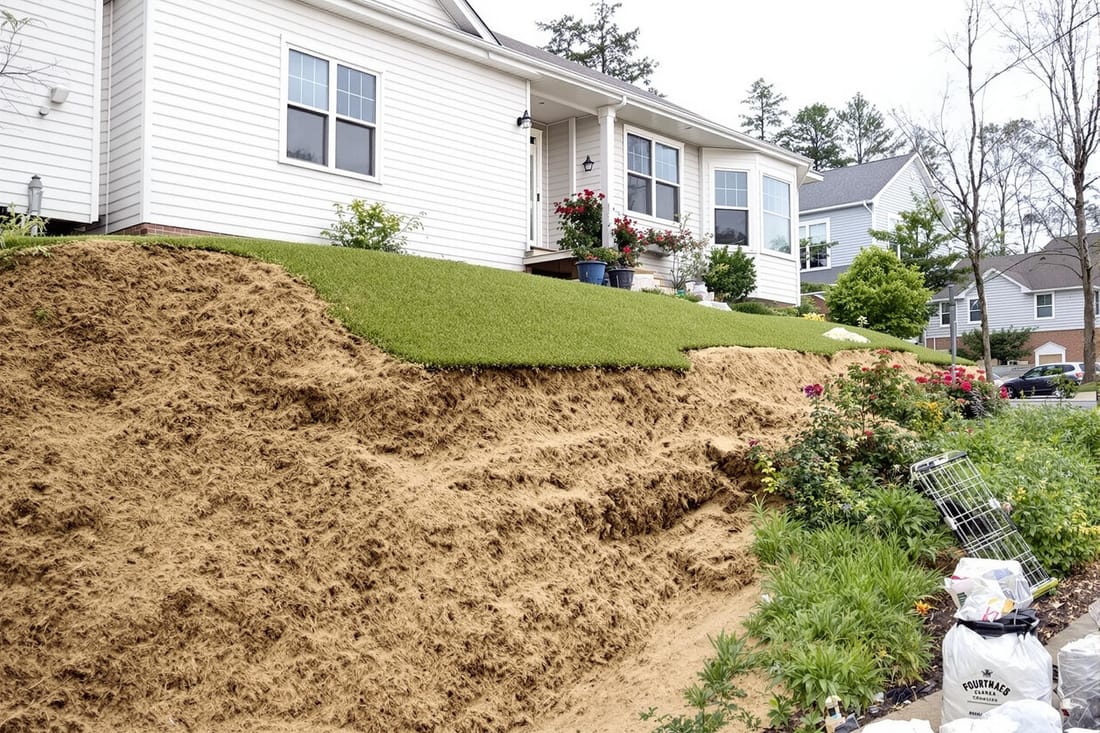
Steep yards, drainage ditches, retention pond banks, and canal edges in Jacksonville are under constant pressure from heavy summer storms and sandy soils. If bare soil is left exposed on these slopes, you get ruts, washouts, and sediment washing into streets and storm drains. Legendary Hydroseeding Jacksonville focuses on slope and bank erosion control hydroseeding that is designed for our specific North Florida conditions, not a generic national mix.
Residential erosion control hydroseeding involves spraying a slurry of seed, fertilizer, mulch, tackifier, and sometimes soil amendments across the slope in a single, even application. For erosion control projects, we adjust the recipe to prioritize soil binding and fast cover rather than just appearance. On steeper banks, that can mean extra tackifier for adhesion, a heavier mulch rate for protection, and a seed blend that roots quickly in our local sandy loam.
Jacksonville’s climate shapes how we work. We plan seed types and timing around hot summers, hurricane season, and the occasional winter cold snap. For example, summer projects may use more Bermuda and Bahia for heat tolerance and deep roots, while fall projects can include ryegrass as a quick nurse crop to hold the soil while permanent species establish. The goal is always the same: get dense, rooted vegetation stabilized before the next major rain event hits your slope.
How Our Slope and Bank Hydroseeding Process Works
When Legendary Hydroseeding Jacksonville tackles a slope or bank, we start with the basics: slope assessment, water flow, and soil condition. We inspect for existing rills or washouts, check how water currently runs across or down the bank, and look at soil texture. Soft, sandy slopes by retention ponds usually need a different approach than compacted fill behind a new driveway.
Preparation comes next. We remove debris, loose rock, and weeds, then lightly scarify or roughen the surface wherever we can safely access it. This roughening is not cosmetic; it gives the slurry something to lock into and reduces the risk of the mulch sliding during heavy rain. If there are deep ruts or undercut areas, we fill and reshape those first to avoid creating channels that could defeat the new vegetation.
Once the surface is ready, we load our hydroseeding tank with water, selected seed mix, fertilizer, fiber mulch, and tackifier. For erosion control, we typically run heavier mulch and tackifier rates than you would see in a simple lawn install. Our crew then sprays the slurry from the bottom up, overlapping passes so every square foot of slope is evenly covered. On difficult access areas, we use hose runs instead of trying to drive equipment down the bank, which keeps the soil intact.
Before leaving, we walk the site with you. We point out where water is expected to move, and explain which sections are at highest risk during the first few storms. You receive clear watering and access instructions so foot traffic, pets, or maintenance crews do not disturb the freshly applied mulch while the seed is germinating.
Materials and Design Options for Erosion Control Hydroseeding
Not every slope in Jacksonville needs the same solution. At Legendary Hydroseeding Jacksonville, we tailor the hydroseeding mix and design to the steepness, exposure, and use of the area. The key variables are seed species, mulch type and loading rate, tackifier selection, and whether we pair hydroseeding with physical controls.
For seed, we typically use a combination of deep rooting grasses such as Bahia or Bermuda for sun exposed banks, often with fast establishing ryegrass as a temporary cover. Shaded or partially shaded slopes under oaks or along woodlines may need different varieties that tolerate lower light. Around pond edges or ditches that stay damp, we may recommend blends that handle occasional standing water without rotting out.
Mulch options include standard paper or wood fiber for moderate slopes, and higher performance blends for steeper banks or areas with concentrated runoff. Higher mulch rates create a thicker protective blanket that shields seed from pounding rain and helps hold moisture in the topsoil. Tackifier is the glue in the system. For erosion control jobs, we use stronger binders and increased application rates so the mulch mat stays in place during those first critical storms after installation.
On very steep or high risk banks, hydroseeding can be combined with erosion control blankets, wattles, or small diversion swales. In those cases, we install the physical controls first, then hydroseed over and around them. The vegetation roots through the blankets, which gives you immediate mechanical protection plus long term living reinforcement.
What Drives the Cost of Residential Erosion Control Hydroseeding
Customers in Jacksonville often ask why erosion control hydroseeding costs more than a basic front yard hydroseed. The reason is that slopes and banks require more materials, more prep, and more care to do correctly. Understanding what drives cost helps you compare quotes on more than just a per square foot number.
Slope steepness and access are major factors. A gentle backyard berm that we can drive near with our rig is faster and uses less hose than a sharp canal bank behind a fenced yard where everything must be sprayed from a distance. More hose and more time per square foot increase labor costs. Extremely steep or unstable banks may need additional safety measures and sometimes a two visit process.
Material loading is another big driver. Erosion control work typically uses heavier mulch and tackifier rates, and sometimes upgraded mulch types or specialty seed blends. These products are the difference between a slope that washes out in the first thunderstorm and one that holds. When you see a low price that seems too good, it is often because the contractor has thinned the mix to save on material.
Site prep also matters. If we need to repair ruts, add topsoil to thin areas, or address drainage issues like a concentrated downspout pouring onto a slope, that adds to the scope. We are upfront about which items are optional aesthetic improvements and which are critical to long term erosion control. That way you can make informed decisions based on budget and risk tolerance.
Common Erosion Problems on Jacksonville Slopes and How We Address Them
Many of the same problems show up repeatedly on Jacksonville slopes. Thin topsoil over compacted fill, bare construction banks left unprotected, and ditches that were never stabilized after installation all lead to similar outcomes: exposed sand, deep channels, and muddy runoff. Legendary Hydroseeding Jacksonville has built our approach around fixing these issues in a practical way.
For slopes that already have rills or gullies, simply spraying hydroseed is not enough. We first knock down the high edges and fill the channels so water is not funneled into the same lines again. Where runoff from a roof or driveway is creating a concentrated flow, we may recommend correcting the discharge point or dispersing the flow before it reaches the slope. Hydroseeding holds soil in place, but it works best when sheet flow is spread out, not focused.
Another frequent problem is homeowners mowing too early or walking on slopes before root systems are established. To avoid this, we provide specific time frames: how long to keep off the area, when you can begin light foot traffic, and when it is safe to run a mower across the bank. We also explain realistic expectations. In our climate, you will see green coverage fairly quickly, but full stabilization takes a season or two of root growth.
If your bank borders a pond or drainage canal, we pay special attention to water level changes. Fluctuating water can undercut the toe of a slope. In those situations, we may adjust the mix near the water line and sometimes suggest additional measures like rock toes or low retaining features where hydroseeding alone cannot counteract constant wave or flow erosion.
What Jacksonville Homeowners Should Do Before and After Hydroseeding
Good results from residential erosion control hydroseeding come from partnership. Before we arrive, we ask homeowners in Jacksonville to clear personal items from the work area, flag underground utilities or sprinkler heads, and identify any access limitations such as locked gates or low overhead branches. If irrigation is present, we will coordinate controller settings with you so watering supports germination instead of causing runoff.
Timing is important in North Florida. We often recommend scheduling major slope work outside the peak of hurricane season when possible, and avoiding windows where several days of heavy rain are forecast. We can install in a variety of conditions, but your odds of trouble free establishment improve if the first week or two after seeding are not dominated by extreme storms.
After installation, your main responsibilities are watering correctly and protecting the area. Most erosion control hydroseeding on slopes needs light, frequent watering at first, then a gradual shift to deeper, less frequent cycles to encourage deep rooting. Overwatering can cause the mulch to float or slide, so we provide a schedule based on the season and your irrigation system.
You should also plan to keep vehicles, wheelbarrows, and heavy foot traffic off the treated bank until the grass is well rooted. If damage does occur, call us early. Small bare spots or localized washouts are much easier to fix promptly than after an entire rainy season. Our goal at Legendary Hydroseeding Jacksonville is to leave you with a slope or bank that stays in place through our real weather, not just long enough to look good in a photo.