Home › Dust Control and Soil Stabilization
We offer dust control hydroseeding in Jacksonville, FL to stabilize bare soils, stockpiles, and disturbed areas on construction and industrial sites. Using specialized mulches, binders, and sometimes seed, we lock down surfaces to reduce dust emissions and erosion. Improve safety and compliance with targeted soil stabilization solutions.
Legendary Hydroseeding Jacksonville provides professional dust control hydroseeding throughout Jacksonville, FL, Florida and the surrounding area. Our licensed, insured crew delivers safe, clean, on-time work with a free estimate before anything begins. Call 904-867-3706 or request your free quote.
Dust control hydroseeding that stands up to Jacksonville weather
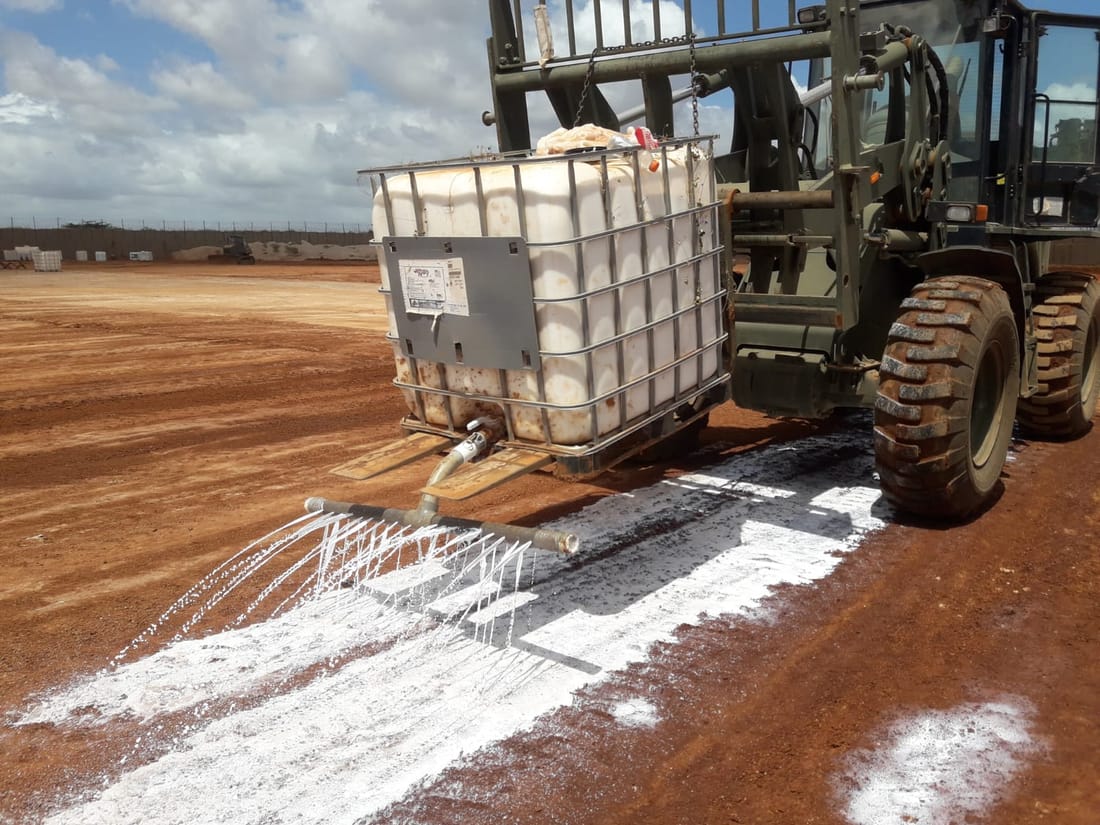
Loose soil and Florida wind are not a good mix. On construction sites, dirt roads, borrow pits, and cleared lots around Jacksonville, blowing dust can shut down work, damage equipment, and frustrate neighbors. Legendary Hydroseeding Jacksonville uses dust control hydroseeding to lock the surface in place so it stays where it belongs.
Instead of running water trucks all day or spreading loose mulch that blows away, we apply a wet slurry that dries into a bonded mat over the soil surface. That mat reduces dust, resists afternoon thunderstorms, and gives you a stable working surface. On slopes or stockpiles, we can design the mix to hold longer so you are not constantly redoing the same area.
We work across Duval, Clay, St. Johns, and Nassau counties, so we know the common local soil types: fine sand that drifts with any breeze, fill dirt that turns to powder after a few dry days, and clayey cuts that crust then break apart. The dust control mix we choose depends on what you actually have on the ground, the life span you need, and how much traffic the area will see.
How dust control hydroseeding actually works
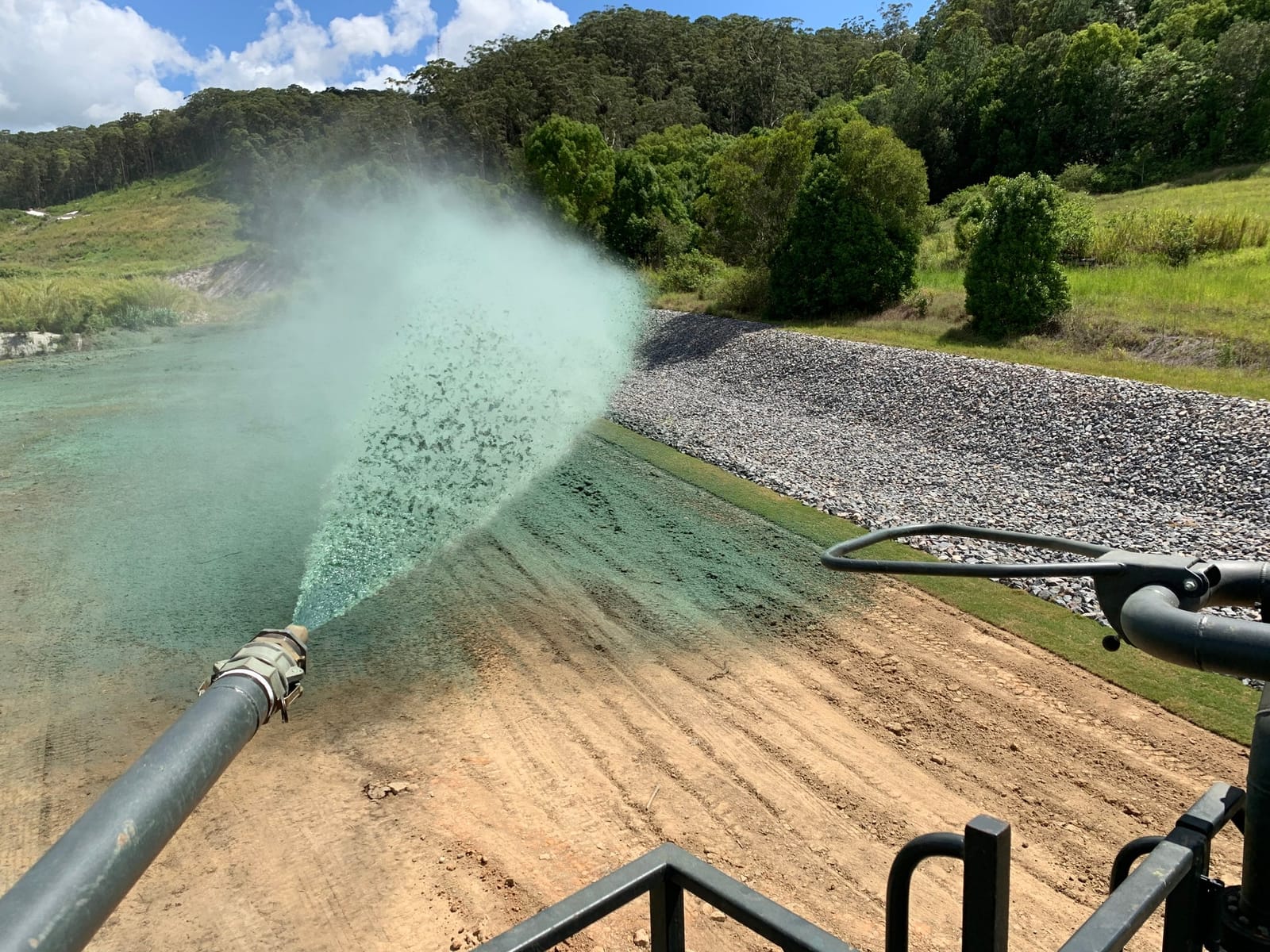
Dust control hydroseeding is a mechanical and chemical surface treatment. We load water, mulch, tackifier (a soil binder), and sometimes soil conditioners into a hydroseeder tank, mix it into a uniform slurry, then spray it evenly over the exposed areas through large hoses or turret nozzles.
The mulch provides structure. For short term dust control on level pads or haul roads, we often use a finer paper or blended mulch that sprays evenly and forms a thin skin. For stockpiles, steep slopes, or long term stabilization, we may use heavier wood or bonded fiber mulch that creates a thicker, more durable mat. The tackifier is what actually glues soil particles together. We adjust the rate based on wind exposure and how long the surface needs to stay in place. Light applications might last a month or two, while heavy bonded applications can hold for many months.
On some projects, we add seed for later vegetation, but for pure dust control the focus is surface binding. In Jacksonville, many sites are staged for future building within 3 to 12 months. In those cases, we often design a hybrid dust and temporary stabilization mix that controls dust immediately, reduces erosion during summer storms, and gives you a light grass cover that can be scraped off easily when you are ready to build.
The key to a reliable result is surface prep. If the ground is rutted, covered with trash, or has loose clods, the mat will crack and peel. Before we spray, Legendary Hydroseeding Jacksonville will recommend grading, light compaction, and removal of debris. Where equipment has left deep tire tracks, a quick pass with a box blade or dozer makes a big difference in how long the treatment lasts.
Step by step: what to expect from our process
Every dust control and soil stabilization project starts with a site walk. We look at soil type, moisture, slope, access for our trucks, and how close you are to neighbors or public roads. We also ask how long you need control, whether trucks or equipment will drive over the treated areas, and if there is a stormwater plan we need to match.
Next, we design the mix. A typical Jacksonville construction pad might get a medium rate wood or paper mulch, a polymer or guar tackifier at higher than seeding rates, and sometimes a light seed mix if you want vegetation for added stability. For long term stockpiles near the St. Johns River or Intracoastal, we usually recommend heavier bonded applications that can handle strong winds and heavy rain.
We then schedule around the weather. In Northeast Florida, the best windows are usually morning applications from March through early November, before afternoon heat and thunderstorms build. In winter, lower humidity lets the mat cure quickly, but we avoid spraying right before a cold front with strong winds. If rain is in the forecast, we aim to apply at least 4 to 6 hours before any significant shower so the surface can set.
On application day, our crew sets up traffic control where needed, loads onsite water if allowed or uses our own, and sprays from the farthest point back to the access point so we do not track over fresh material. We check coverage rates constantly using the tank volume and square footage, and we adjust hose technique on steep slopes or tight spaces. Before leaving, we walk the site with you to point out curing times, where to keep traffic off, and what to watch for after the first rain event.
Costs, options, and how to control your budget
Pricing for dust control hydroseeding in Jacksonville depends on more than just square footage. The three biggest drivers are access, application rate, and required life span.
Access affects how quickly we can work. Wide open lots that we can reach with our truck and turret nozzle are more economical. If we need to run long hose lines around buildings, under power lines, or into tight retention areas, that adds labor time. Steep slopes or deep borrow pits may require additional safety setup and spotters, which also affects cost.
Application rate refers to how much mulch and tackifier we are putting down per acre. A light short term dust control treatment uses less material and costs less per square foot but will not last as long or hold up to heavy equipment. Long term soil stabilization for months of exposure uses thicker mulch and more binder, so the material cost increases. We will usually give you a couple of options so you can match the treatment life to your construction schedule instead of paying for more than you need.
Required life span is tied to Jacksonville weather. If your site will be exposed through the summer rainy season and hurricane threats, you need a more robust spec than a winter only job that will be paved in 30 days. We factor in local wind exposure, especially for sites along open marshes or near the river where gusts are stronger.
You can control budget by phasing work. Many local contractors ask Legendary Hydroseeding Jacksonville to treat only the most sensitive edges first, like areas near homes or busy roads, then expand coverage as more ground is opened. Another cost saver is combining dust control hydroseeding with your erosion control and temporary stabilization needs, so one application serves multiple purposes instead of repeating different treatments.
Common problems in Jacksonville and how we prevent them
Jacksonville has its own set of dust control challenges: fine sugary sand that drifts fast, sudden thunderstorms that carve rills, and construction schedules that change weekly. We design our dust control hydroseeding work to handle these realities instead of using a one size fits all mix.
One common issue is underestimating wind on flat, open sites. Even though we are in a humid climate, steady coastal and river breezes can lift dry fines off pads and stockpiles. To counter that, we increase binder rates on exposed edges and ridge tops, and we often double pass high risk zones like entrances and haul road tie ins. We also look at your prevailing wind direction so we can focus treatment on the sides that create the most nuisance for neighbors.
Another problem is thunderstorm washouts. If you apply a very light dust palliative, a single heavy storm can cut channels and expose bare soil again. We address this by designing cross slope breaks into the grading where possible, then reinforcing those breaks with heavier hydroseeding rates. On slopes that drain into storm ponds or wetlands, we may add fiber checks or straw wattles below the hydroseeded area to catch any material that moves.
Communication and timing also matter. Jacksonville projects often accelerate when a permit or inspection date comes up. When that happens, last minute grading can leave fresh soil exposed right before a storm. Legendary Hydroseeding Jacksonville tries to coordinate with your superintendent or project manager so we are scheduled as soon as rough grading is finished, rather than days later. If conditions change, a quick call lets us adjust the mix or timing so you get a treatment that will actually hold under the new schedule.
Before you hire any dust control contractor, ask about their specific mixes for Florida sand and their experience with local inspectors. Some agencies want to see both dust control and erosion control measures in place before certain milestones. We are familiar with those expectations and can help you choose a hydroseeding approach that satisfies both dust complaints and compliance requirements with one practical, field tested solution.